
Rohit Sharma’s Aggressive Batting: How His Approach Changed India’s Game
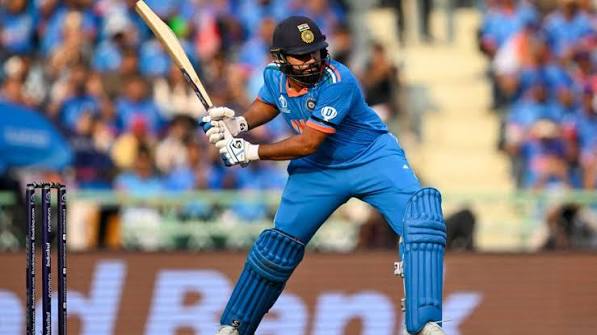
Rohit Sharma’s career is often associated with large scores, but his impact on Indian cricket extends beyond individual records. During the later stages of his international career, his role changed from an opener expected to build long innings into a batter tasked with creating an advantage from the first overs. That transition influenced how India approached limited-overs cricket and how other batters interpreted risk.
The change was most visible in the way Sharma attacked before a match had developed a clear rhythm. Like formats built around immediate decisions, including the jetx game, his approach placed emphasis on judging risk within a short window rather than waiting for conditions to become predictable. For India, the result was a batting model in which the opening phase became an opportunity to control the match rather than simply survive it.
From Accumulator to Attacking Opener
Sharma was not always defined by immediate aggression. Earlier in his career, he often required time to establish his innings. Once settled, he could accelerate and turn a moderate start into a major score.
His move to the top of the order gave this method a structure. Opening allowed him to face more deliveries and use fielding restrictions, while his ability to bat deep reduced the cost of a cautious beginning.
For years, that combination worked. Sharma could score at a controlled rate during the opening overs and increase the tempo as the innings progressed.
Later, however, India faced a different tactical problem. Conservative starts sometimes left too much acceleration for the middle order. Sharma responded by changing his own risk profile.
Why the Powerplay Became More Important
The first ten overs of an ODI and the first six of a T20 innings provide opportunities because fewer fielders can protect the boundary. Sharma increasingly treated these restrictions as an attacking resource.
Instead of waiting for loose deliveries, he became more willing to create scoring opportunities. Length balls could be hit over the infield, while short deliveries were attacked before bowlers could establish control.
This produced an important tactical effect. Bowlers were forced to adjust earlier than planned. A fast bowler who expected several overs to test an opener outside off stump might instead shorten the length or change the field after only a few deliveries.
Even when Sharma did not produce a major score, his innings could change the conditions faced by the next batter.
The Difference Between Aggression and Recklessness
Sharma’s later approach involved more risk, but it was not simply an attempt to hit every ball.
His aggression depended on identifying scoring zones. Against pace, he could use the pull shot to punish short bowling. When bowlers moved fuller, his ability to hit through or over the off side created another problem.
The objective was not maximum force on every delivery. It was to reduce the number of deliveries that the bowler could deliver without pressure.
This distinction matters because attacking cricket is sustainable only when shot selection remains connected to the match situation. A batter who attacks without considering length, field placement, or movement becomes predictable.
Sharma’s method was more selective. He accepted a higher probability of dismissal because the potential team benefit of a fast start had increased.
How the Approach Changed India’s Batting Structure
The effect extended beyond Sharma’s own strike rate. An aggressive opener changes the responsibilities of the players around him.
When India reached the end of the powerplay with a strong scoring rate, the middle order had more options. Batters could spend several deliveries assessing conditions without allowing the required rate to rise.
This was particularly important in tournament cricket. India had previously faced criticism when top-order stability did not translate into enough pressure on opponents during the opening phase.
Sharma’s response was tactical rather than cosmetic. Instead of asking the middle order to compensate later, India attempted to create the scoring advantage earlier.
The approach also reduced dependence on one batter playing through most of the innings. If the opening partnership generated enough momentum, several players could contribute shorter innings without damaging the total.
Captaincy Reinforced His Batting Philosophy
Sharma’s role as captain made his batting transformation more significant. A captain asking teammates to play with intent carries greater credibility when accepting the same risks personally.
His innings at the top of the order therefore functioned as tactical communication. When Sharma attacked despite the possibility of an early dismissal, other players could see what the team considered acceptable risk.
This was particularly visible during India’s 2023 ODI World Cup campaign. Sharma repeatedly attacked during the powerplay rather than prioritizing personal milestones.
The strategy helped India establish favorable match positions before the middle overs. Opponents had fewer opportunities to control the innings through defensive fields and predictable bowling plans.
The 2024 T20 World Cup as a Tactical Test
India’s successful 2024 T20 World Cup campaign provided another demonstration of this philosophy.
Sharma continued to attack during the tournament, including against opponents with strong pace attacks. His 92 against Australia showed how rapidly his approach could alter a match.
The significance of such innings was not limited to the final score. Early aggression forced fielding teams to react rather than execute their original plans.
That difference is central to modern limited-overs batting. Teams increasingly compete not only through total runs but through control of specific phases.
Sharma helped India treat the powerplay as one of those phases.
How His Approach Influenced the Next Generation
Sharma’s tactical legacy is relevant to younger Indian openers because it changes the definition of a successful start.
An opener no longer needs to score a century to provide substantial value. A shorter innings played at a high scoring rate can create conditions that improve the performance of the entire batting order.
This does not mean every opener should copy Sharma’s shot selection. Players have different strengths, and aggression must be built around technique.
The broader lesson concerns intent. India demonstrated that early wickets can sometimes be an acceptable cost when the strategy consistently produces pressure and creates scoring opportunities.
A Shift From Personal Output to Team Impact
Sharma’s evolution represents a wider change in limited-overs cricket. Traditional evaluation often rewards runs, averages, and centuries. Modern tactical analysis also considers when runs are scored and how they affect the opposition.
By attacking earlier, Sharma sometimes reduced his own opportunity to produce large individual scores. At the same time, he increased the probability that India would control the opening phase.
That trade-off explains why his later career cannot be understood through averages alone.
His influence came from changing the purpose of an opening innings. The objective was no longer simply to survive, accumulate, and accelerate. It was to create pressure immediately, force tactical adjustments, and give the rest of the batting order more freedom.
In that sense, Sharma’s aggressive approach did more than change his own game. It helped redefine how India approached the first overs of an innings.